|
$$PLAIN_TEXT_PREVIEW$$
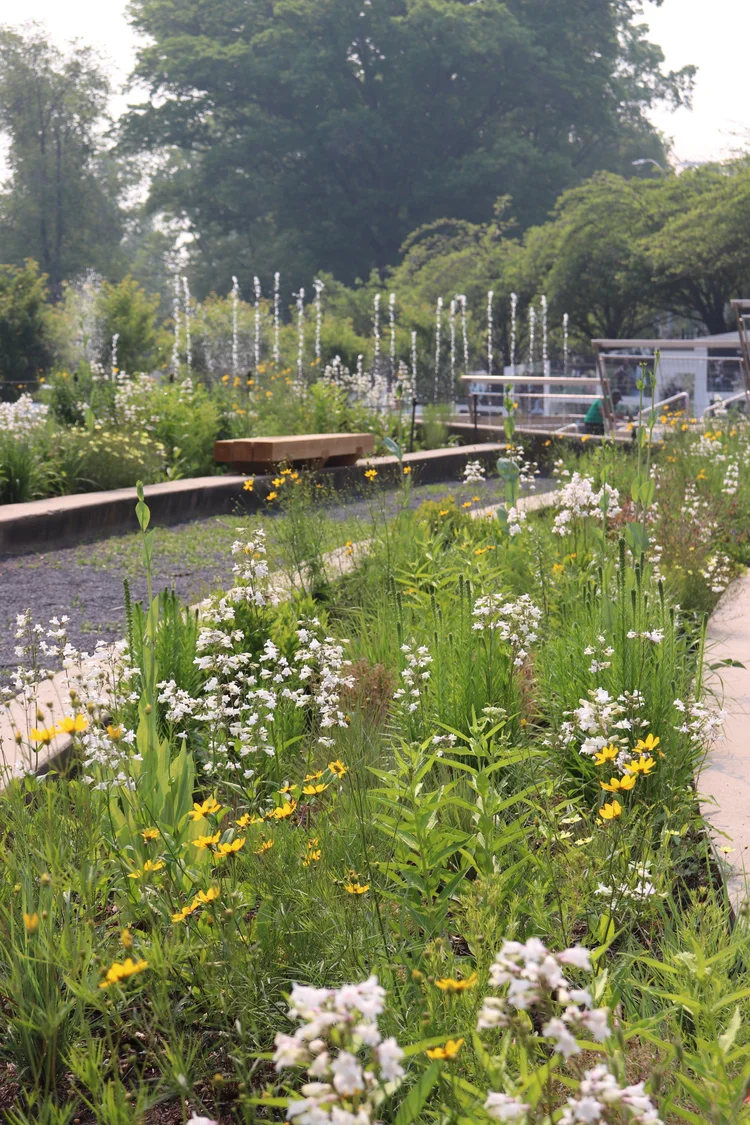
Hi Plant People,Happy belated super Buck Moon! This month’s name comes from the antlers of male deer, that are growing quickly in New England around now. Fun news: I have a major surprise for next month and we moved to the woods of Connecticut. It’s amazing… despite the ticks. I made a webpage for the Brooklyn Museum garden! I am so pleased with how it’s growing in and hope that the adage of “if you plant a garden, and it immediately looks good, you’ve done something horribly wrong” does not apply here. We worked hard for this to happen. We bought a few species of showy plants as large as possible, decompacted soils before planting, and then soaked plants right after they went in the ground. Sounds obvious, right? You would be AMAZED how few people properly water plants at planting time. Anyway, yellow and white will dominate till early fall. Send me pictures if you visit!
|
|
Fireflies are like butterflies: they’re a gateway insect, beloved even by people who “hate bugs.” And it’s great that they’re having a moment now, as nearly a third of them are at risk of extinction. The Washington Post did an overview of firefly ecology and the impact of light on reproduction. Spoiler: artificial light disrupts an already delicate and tenuous process. Harvard researcher Avalon Owens says, “I have no idea how we still have fireflies when they’re so bad at this. So many things can go wrong.” National Geographic interviewed famed researcher Dr. Sarah Lewis about ways to support fireflies: leave the leaves, plants natives, don’t mow or use pesticides, and the big one: turn off all lights at night. A full 99% of us live under light polluted skies. Diminishing lights by using dimmers, curtains, and motion sensors is helpful, but absolute darkness is the best. One study showed that even dim lights at night reduce the flashing of males. The Smithsonian profiles firefly hunter Christopher Heckscher and takes us with him searching for nearly extinct species in wetlands. And the Animal Behavior Podcast talks to Sarah Lewis about the new research that is generating all this media attention. Lastly, Nancy Lawson wrote a great piece on more advanced strategies for supporting fireflies for all of you fancy gardeners: encourage moss, leave deadwood, don’t bother your slugs and snails, plant evergreens and hedgerows, and for goodness sake, reduce / remove / stop mowing your lawn. Want to learn more? Here is the absolute best field guide. And here is a free book from Xerces on firefly ecology and conservation. Want to do more? Join a citizen science study. Slip this pamphlet from Xerces on home light reduction in the mailbox of a bright neighbor. Or support your local Dark Sky committee. There are so many environmental crises these days that it can be a struggle to comprehend them, much less have an effect. But supporting fireflies is totally doable! And the rewards can be quick, delighting everyone. It’s literally as easy as turning off the lights.
|
Do you have friends who still think honeybees need saving? Do they want to place hives in parks and on wild lands to “help pollinate wildflowers”? You’re in luck! Xerces Society just came out with a handy fact sheet to set them straight. It has been a really long time since I’ve been impressed by an app. But FloraQuest is fantastic. It’s like a botany multitool for eastern North America. It has range maps, photos, descriptions, but most importantly, an interactive dichotomous key! Don’t be fooled by the “southeast” part, I’m in New England and it is wildly helpful. Orchid pollination is a whole universe. They are by far the trickiest and most complex flowers, mimicking females bees so that males will mate with them, and mimicking male wasps so that males will fight them. As someone who studies pollination ecology, orchids are outright intimidating. Thankfully there’s a new book! Demystifying Orchid Pollination: Stories of Sex, Lies and Obsession comes out from Kew next month and I can’t wait to read it.
|
Are we all in love with Mark Hamer? We are, right? How do you not love this retired English gardener / poet who shares his shift from “being a gardener” to “gardening himself” in older age so that he can dance with his wife again? After I read “How to Catch a Mole,” I bought 20 copies to give to people. His work is a gift and how fortunate for us that Margaret Roach interviewed him for the Times. The coolest flower show of last year was actually in California. Garden historian and horticulturist Abra Lee co-organized the Music x Flowers event in LA last fall, showcasing the work of Black women designers. Here is a short and lovely video of the show. Hard to pick what I like more: the Impala lowrider bursting with tropical flowers or the carnation Nikes. Shots fired! Famed, old-guard British gardening celebrities have their knickers in a twist over any attempt to make ornamental gardens more ecological. Sir Monty Don and Alan Titchmarsh are going on record against rewilding, incorporating weeds, and naturalistic aesthetics. I for one find it stodgy. Certainly, we’ve all felt like old men yelling at weeds from our porches once in a while, but it’s quite another thing to do so in the national press. Their issue seems to be perspective: they’re upset that an entirely self-serving, aesthetic practice is now passé. Titchmarsh, who seems like quite the character, claimed ecological gardeners are “brainwashed by current trends.” Anyway, I don’t need to refute this, do I? We can all recognize people trying to stop progress while we smile, nod, and march past them, can’t we? I honestly did not know that reactionary horticulture was a thing, but here we are. The New York Times Business Section did a story on swapping out turf and clipped hedges on corporate campuses in favor of meadows and native plants. The story provides a good lesson on pitching this work to more corporate types: lead with carbon sequestration, reduced maintenance costs, water use, tax rebates, and include as many statistics as humanly possible: “One gas-powered leaf blower used for an hour generates the same amount of emissions as a car driving 1,100 miles.” Bonus for the mention of friend and Loeb Fellow Pamela Conrad’s landscape carbon tracking calculator, Pathfinder! It’s so helpful. When planting large areas with native plants, there is often a bottleneck due to a lack of native plants and seed. More and more, gardeners and ecologists are setting up temporary nurseries on the sites they’re replanting. It’s such cool work because it not only provides the necessary plants, but also construction is often preceded by regional seed and plant collection, preserving the local genetics of populations. Here’s the story of a land-bridge replanting in LA and how they made it work. Getting sick of watching the world burn? An Extinction Rebellion chapter in Spain destroyed 10 golf courses by planting saplings on the greens. The activists used the action to “denounce the wasting of water by golf in the midst of one of the worst droughts in history.” Hard to critique direct action like this when golf courses in Spain used more water than the cities of Madrid and Barcelona combined. Moth people rejoice! Our favorite furry guys are getting some attention. A new study suggests that moths in urban England made up a full third of all pollinator visits, surprising researchers with the types of plants they visited: not just pale wildflowers but fruit trees, brightly colored flowers, and many woody plants. It’s important to know this information, as urbanization leads to less diversity of the types of flowers moths visit. Good news: this can be addressed by planting native plants in cities! Related stories from Newswire and Wired. More evidence that this movement is totally mainstream: Martha Stewart hosts an instructional long-read on how and why to get rid of turf, Tovah Martin writes about installing meadows in the Washington Post, House Beautiful tells readers which invasive plants to “rip out immediately,” and Better Homes & Gardens let Benjamin Vogt write at length about life after no-mow-May. The indomitable Heather Holm made a listicle of ways to support native bees: feed them, house them, protect them, and celebrate them! Great tips in here for new-bees. An new exhibit opened at the New York Botanical Garden by artist Ebony G. Patterson. Hundreds of black vultures lurk in the gardens and glass feet stick out from under a wall of Tradescantia. Will Heinrich writes in the NY Times, “A display of petunias and begonias such as you might buy at Home Depot — the kind of tropical plants made available in New York by cargo planes and capitalism — gains historical context, or moral grounding, from the addition of Patterson’s lost species and glass feet. You’re forced to think about the larger forces that make botanical gardens possible.” Through Sept 17. Milkweed is in full bloom just about everywhere, but have you ever looked incredibly closely at their flowers and pollinia? It is so cool and you can impress your friends by removing pollinia with a tiny stick like a bee leg! Info here. Gardens Illustrated profiled Peter Korn’s extensive home garden and nursery in Sweden, all of it planted in 6” of straight sand. This leads to less weeding, less flopping, less pest pressure, and longer lived plants. The plants grow shorter and “harder” than in mesic gardens, as the sharp drainage limits competition and excessive growth. It’s also seriously beautiful, as you can see. But I wouldn’t say it’s ecological, as some people do, or laud the “biodiversity.” It’s really an advanced study in matching plant species to cultivated microclimates, with many possible applications for ecological work. Kew Researchers completed a massive study assessing thermogensis in Amorphophallus. Many Arums can make their own heat by metabolizing starches during flowering. This wafts the scent of their often putrid flowers farther around them and can attract heat-loving pollinators. One species from Southeast Asia was found to heat up >70°F above ambient temperatures. Other interesting findings include: only the male parts of the flower produce heat and that the striking morphology of the Amorphophallus spadix is the result of heat generation and distribution, which is another way of saying it’s a hot phallus. I’m sorry but it’s true. Paper here. A new documentary is in the works on one of the most important American gardens: Anne Spencer was a Harlem Renaissance poet, teacher, librarian, civil rights advocate, and gardener. The Garden Conservancy just released a trailer for the upcoming film on her life and land in Virginia. Can’t wait. Urban ecology roundup: Bees in cities without enough habitat have more pathogens, are more inbred, and more stressed - study here. Wild bees in cities with more honey bees have lower diversity. Local extinctions of moths are sometimes due to high temps and low precipitation, and even small green spaces can help. New word alert! The acarodomatia are found on the undersides of leaves. They’re little houses for mites that leaves make out of fine hairs along the leaf veins and at axils. The mites protect the plant by eating other herbivores and predatory fungi. Still can’t picture it? The amazing Charley Eisman has you covered. Plants that are pollinated by honeybees tend to make fewer, lower-quality seeds than those visited by native pollinators, a new study out of California found. In San Diego county, feral honeybees make up a whopping 75% of all floral visits, providing researchers with the necessary conditions to compare pollination. The poor pollination is likely due to honeybees visiting many flowers on the same plant, depositing a plant’s own pollen on itself, leading to inbreeding. Native pollinators flitted between plants twice as often. Long-term, this could very well weaken plant species in the region. Ok, good new / bad news pesticide rollercoaster: Babies born to mothers who live around banana plantations have lower birthweights and are more likely to be born prematurely. Neonics have made agriculture 48 times more toxic to insects and have been proven to harm songbirds, deer, and even fish. In fact, the EPA says that 3/4ths of all of all endangered plants and animals are likely being harmed by neonics. Does that spur them to act? Not at all. This shocking piece by entomologist Clay Bolt illustrates the harm these pesticides cause and the importance of banning them. But good news! New York just might be the first state to do just that! The Gov just needs to sign the bill. Do you know her? Please tell her to sign it.
This one has a happy ending: The USDA was set to spray a carcinogenic insecticide over 25,000 acres in New Mexico to kill off native grasshoppers. Why would they do something so reckless? Because cattle ranchers don’t want other animals to compete with cows for the grass. To be clear: our tax dollars, killing native animals, so that a private, environmentally destructive industry can extract profit from public land. But Xerces Society started a campaign and effectively halted the practice! You can donate to Xerces here. Perhaps you want to help change the way government regulations are created? The EPA is organizing its first National Environmental Youth Advisory Council. If you know people aged 16 to 29 who have something to say about ecology and climate, please apply here. Canadian artist Laara Cerman makes these beautiful photo scans of native and naturalized plants, reminiscent of german botanical wall charts, with the goal of helping to cure plant blindness. More from Rewilding Mag here. After 60 years, David Austin Roses has finally named a rose after a non-white person. It’s almost ridiculous that this is even newsworthy - aren’t they just embarrassed? But the honoree in question is Danny Clarke, who seems cool, and made that great mini-garden at Chelsea. And he seems happy so I’m happy. Instagram houseplant influencer Summer Rayne Oakes has started a podcast that sounds legitimately interesting. It’s on the seedy underworld of plant smuggling, produced in the genera of a true crime podcast. It’s called, of course, Bad Seeds. Thanks Garden Rant! New insect research that really should be poems: Monarchs with more white spots on their wing margins had a better chance (3%) of surviving migration. Researchers speculate that this is due to tiny eddies formed around the wing tips as a result of the temperature gradients between black boarders and the white dots. And Luna moths were found to use their wing tails to avoid getting eaten by bats, who can be tricked by a long, waggling tail, to skip eating more vital parts of the body. Ok! You’ve made it to the end at last, dear reader. And I’m excited to tell you about an especially dark style of gardening: a study out of Yellowstone found that pumas kill prey only in areas that work well for ambushing. The decomposing carcasses add nutrients to the soil that then helps high-nitrogen plants grow. Those plants are preferred by deer and other prey, who are lured to frequent the site, where the pumas are hidden, in wait.
|
NOFA MASS Summer Conference July 24 - 27. Worcester, MA Virtual, in person, and open to the public This conference looks wonderful. Lecturers include Uli Lorimer, Jeff Lowental, Owen Wormser and Heidi Dollard so far. More workshops to come. But there is a track in Spanish and one on pollinators. Midwest Native Plant Conference July 28 - 29. Beavercreek, OH Sold out! In person, and open to the public I’ll be speaking alongside of the amazing Darrel Morrison and Chelsea Gottfried of mothing fame at an old monastery turned native plant nursery. Bergamo Landscape Festival September 7 - 24. Bergamo, Italy In person and open to the public The good news: What a thrill to speak at this iconic gathering and among such incredible people: Peter Korn, Teresa Moller and Martin Rein-Cano among others. The bad news: I’ll be virtual! Oh it’s so sad. Some day Bergamo, some day! Massachusetts Gardening Symposium September 23. Waltham, MA In person and open to the public This will be a wonderful conference of ecologically-minded speakers (Nancy Lawson! Veronica Tyson-Strait!) And also, the only instance of an all women lineup I’ve ever been on. A “womanel”? We’ve come a long way, baby. Garden Futures Summit September 28 - 29. Bronx NY In person and open to the public This is a conference of big questions: environment, community, and culture are themes for us to explore the future direction of garden movements. I plant to give a “state of ecological horticulture” rundown, and am really most excited about the conversations we will have. Speakers include: Edwina von Gal, Abra Lee, Jenifer Jewell, Horatio Joyce, Jeff Lorenz, and many folks I’m excited to meet.
|
|
|
|